PAHMC Journal Volume 1 Issue 1 (July 2024)
PAHMC Journal
Volume 1 Issue 1 (July 2024)
Peer Reviewed | Open Access | Biannual Medical Journal
📄 Complete Issue PDF
📑 Table of Contents
Editorial
Title: Impact of Climate Change on Eye Health
Author: Siddiqi MH
Climate change and global warming are contributing to a rise in serious eye diseases and health conditions, some of which can lead to permanent vision loss or blindness. Cataract, pterygium, and ocular surface squamous neoplasia (OSSN) are particularly associated with increased UV exposure. This editorial discusses the broader health impacts of global warming in Bangladesh and calls attention to the links between environmental change and ocular health.
PAH Med Col J. Jul 2024; 1(1): 1
Original Article
Author: Alam MS, Sikandar A, Sultana T, Shaheen MMR
Background: Aspiration is a well-established cause of pulmonary disease and frequently occurs in patients with altered consciousness. Mortality from aspiration pneumonia ranges from approximately 1% in outpatient settings to as high as 25% in hospitalized patients, and can reach up to 70% if not properly managed.
Objective: This study aimed to determine the prevalence of aspiration pneumonia in stroke patients with altered consciousness admitted to the medicine department of President Abdul Hamid Medical College Hospital (PAHMCH).
Methods: A prospective observational study was conducted from May 2018 to March 2019, including 52 adult stroke patients with altered consciousness who developed aspiration pneumonia.
Results: Among them, 76.92% developed pneumonitis, 13.46% developed lung abscesses, and 9.62% developed acute respiratory distress syndrome (ARDS). The overall mortality rate was 23%. Mortality was 8.33% when only one lobe was involved, whereas involvement of two or more lobes was associated with mortality ranging from 25% to 91%.
Conclusion: Physicians and healthcare personnel can reduce the incidence of aspiration pneumonia by ensuring that comatose patients are not left unattended, checking nasogastric tube placement, positioning patients properly, and adhering to routine patient care precautions.
Keywords: Aspiration pneumonia, Pulmonary involvement, Stroke with altered consciousness
PAH Med Col J. Jul 2024; 1(1): 2-7
Original Article
Author: Akter AHMM, Ali MA, Khatun S, Rahman M, Nuruzzaman M, Das K, Rabeya T, Bari MA, Ahammad AN
Background: The neonatal period is a critical phase for a child’s survival, with neonatal deaths accounting for approximately half of all under-five mortalities in developing countries.
Objective: Analyzing disease patterns in healthcare settings helps identify gaps in care and strategies to reduce neonatal morbidity and mortality.
Methods: This hospital-based retrospective study assessed admission patterns and outcomes in the neonatal care unit of President Abdul Hamid Medical College Hospital, Kishoreganj, reviewing medical records from March 2022 to February 2023.
Results: Of 408 neonates admitted, 249 (61%) were male and 159 (39%) were female. The leading causes of admission were birth asphyxia (35.2%) and prematurity (32.4%), followed by meconium aspiration (14.7%) and sepsis (9.8%). Among admitted neonates, 250 (61.3%) improved and were discharged, and 89 (21.8%) died. Prematurity with low birth weight was the primary cause of mortality (35.9%).
Conclusion: Strengthening antenatal care and ensuring prompt neonatal resuscitation are essential strategies to reduce neonatal mortality and improve survival outcomes.
Keywords: Low birth weight, Morbidity, Mortality, Perinatal asphyxia, Prematurity
PAH Med Col J. Jul 2024; 1(1): 8-12
Original Article
Author: Adam MJ, Nahar JS, Mullick MSI, Akther N, Khan R
Background: Self-harm is a complex and often neglected public health problem, posing a significant risk factor for 40-50% of people who die by suicide. This problem is common among students in Bangladesh, but there is a severe scarcity of data about its prevalence and pattern.
Objective: This study aimed to determine the prevalence of self-harm among 16- to 18-year-old students in Dhaka city and its relation to psychosocial stressors and psychiatric comorbidities.
Methods: This cross-sectional study was conducted in the Department of Psychiatry, BSMMU, Dhaka, involving students from two colleges.
Results: 15.87% of respondents had a history of deliberate self-harm, more common among female students (18.57%) than male students. Among those with self-harm, 70% had at least one psychiatric illness, most commonly generalized anxiety disorder (34.0%). 73.0% of students had severe stress levels.
Conclusion: This study emphasizes the importance of qualified student counselors in Dhaka’s colleges and the urgent need for holistic, institute-based mental health initiatives.
Keywords: Self-harm, Psychiatric morbidity, Psychosocial stressors, Adolescents, Mental health
PAH Med Col J. Jul 2024; 1(1): 13-18
Original Article
Author: Mustofa MG, Saha S, Ahmed S
Background: Intertrochanteric fractures are among the most frequent types of hip fractures, particularly in elderly individuals with osteoporotic bones. The Dynamic Hip Screw (DHS) remains the gold standard for managing these fractures.
Objective: This study aimed to compare the functional and radiological outcomes of unstable intertrochanteric fractures treated with Proximal Femoral Locked Compression Plate (PFLCP) versus DHS.
Methods: A prospective comparative study was carried out on patients undergoing either PFLCP or DHS treatment between January 2020 and December 2022.
Results: DHS treatment was associated with higher blood loss (159 ml), longer operative time (105 minutes), and delayed mobilization, compared to PFLCP (73 ml blood loss, 91 minutes operative time). Limb shortening was greater in the DHS group (9.33 mm) than the PFLCP group (4.72 mm).
Conclusion: PFLCP demonstrated advantages over DHS in managing unstable intertrochanteric fractures, including reduced blood loss, shorter operative time, earlier mobilization, and fewer complications.
Keywords: Dynamic Hip Screw, Proximal Femoral Locked Compression Plate, Intertrochanteric fracture
PAH Med Col J. Jul 2024; 1(1): 19-24
Case Report
Title: Bell’s Palsy in Pregnancy: A Case Report
Author: Sultana S, Khatun S, Rajia S, Rahman A, Ahmed F
Bell’s palsy (BP) is a common condition affecting the facial nerve, often resulting in facial weakness or paralysis. While its exact cause remains unknown, several factors, including pregnancy, can increase the risk. This case report presents a 26-year-old pregnant woman who developed BP in her third trimester, with facial droop, difficulty closing her eye, and slurred speech. After counseling, she was treated with corticosteroids for three weeks with a tapering dosage, along with iron and calcium supplements. Her condition improved and she delivered a healthy baby vaginally, with both mother and newborn found healthy at postpartum follow-up.
Keywords: Bell’s palsy, Pregnancy, Third trimester, Outcomes
PAH Med Col J. Jul 2024; 1(1): 25-27
Review Article
Author: Tajkia T, Mia MR
The Russell’s viper (Daboia russelii) is a severely venomous land snake commonly found throughout South Asia and certain areas of Southeast Asia. It contributes to a significant number of snakebite-related injuries and deaths within its habitat due to its common presence, defensive behavior, and potent hemotoxic venom. Its venom consists of a sophisticated blend of enzymes and toxins that lead to blood clotting disorders, extensive local tissue injury, kidney failure, and widespread systemic effects. This review discusses the snake’s biology, venom composition, clinical manifestations of envenomation, and current treatment approaches, emphasizing the ongoing need for improved antivenom access and public education.
Keywords: Bangladesh, Public health, Toxins, Venomous, Venom
PAH Med Col J. Jul 2024; 1(1): 28-33
PAHMC Journal • Volume 1 Issue 1 (July 2024)
Recent Posts
-

-
-
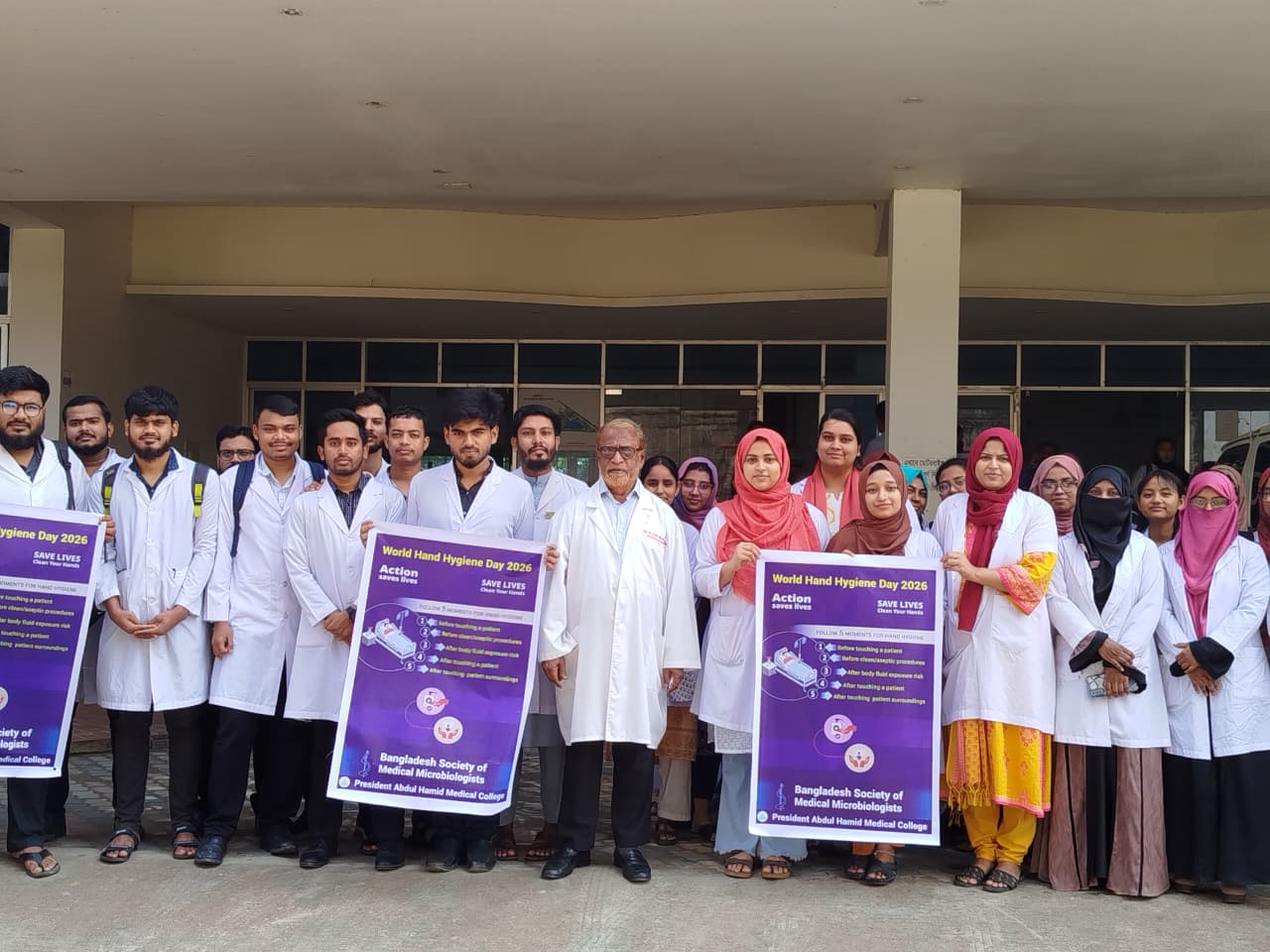
World Hand Hygiene Day 2026
7 May, 2026 -
-